
Villeto
The Operating System for Procurement & Financial Operations
Role
Frontend Engineer
Category
Fintech · Enterprise · Frontend
Status
Live
Outcome
Production platform actively powering Villeto's business operations across multiple web apps
Tech Stack
Overview
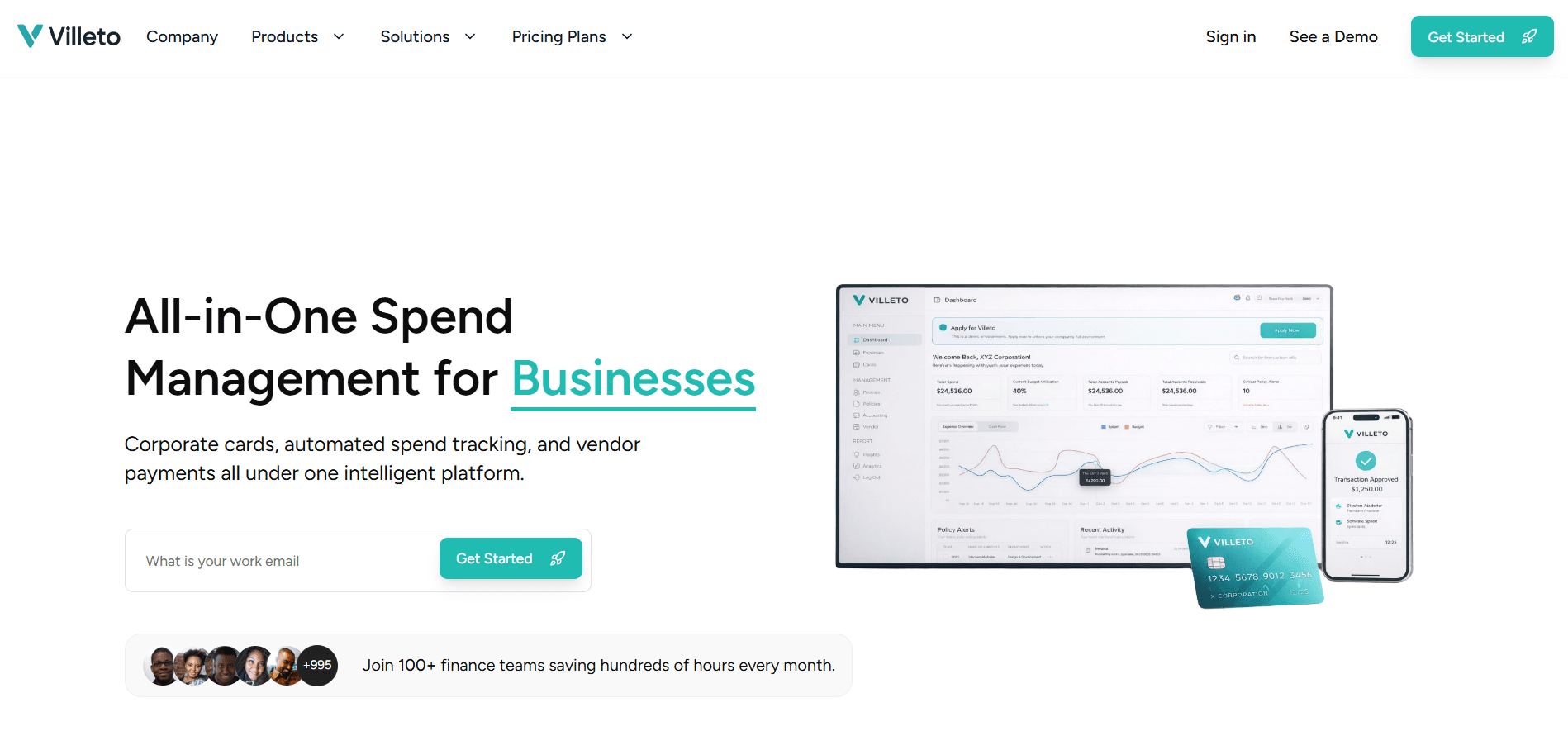
Villeto is the operating system for modern finance teams—unifying seven core products into one workflow: Cards, Expenses, Procurement Intake, Vendor Management, BillPay, and Ledger. As their Frontend Engineer, I engineered the entire frontend ecosystem across the primary dashboard (app.villeto.com), the vendor portal (vendors.villeto.com), and the high-conversion marketing landing page (villeto.com).
The Problem
Finance teams were struggling with fragmented workflows—managing procurement, vendor onboarding, invoice verification, and card expenses across 10 different disconnected tools. They needed a single, intuitive interface with strict controls (audit logs, policy-as-code approvals, and granular RBAC). The platform needed to handle complex data relationships securely without sacrificing performance or user experience.
Process
I built the applications using Next.js 16 (App Router) and TypeScript, ensuring strict type safety from API responses to UI components. Forms were centralized using React Hook Form and Zod to guarantee data integrity. I implemented optimistic UI updates and leveraged React Query's extensive caching to keep the dashboard feeling instantaneous. For onboarding, I integrated contextual Walkthroughs and Setup Guides.
Technical Deep-Dive
One major technical challenge was the advanced Role-Based Access Control (RBAC). I implemented a highly granular, resource-and-action-based permission system (e.g., `procurement.purchase_request.read_company`) where the UI automatically adapts and gates views or actions based on the user's explicit capabilities and department scope. I also built a custom optimistic update hook for transaction states, utilizing a Set of pending IDs to reflect card operations immediately.
Code Sample
Resource-and-action-based RBAC Gate component — automatically adapts the UI based on explicit user capabilities.
Results
The ecosystem is in production, streamlining company expenses, purchase requests, and approvals into a seamless experience. The optimistic UI patterns drastically reduced perceived latency, and the strictly bounded components ensure absolute data integrity across app.villeto.com, vendors.villeto.com, and villeto.com.